TAS - Industrial Arts
Students are given the opportunity to study Technology Mandatory, in Year 7 and 8, where they will study 4 context areas; Digital Technologies, Material Technology 1- Timber, Material Technology 2- Metal and Engineered Systems. Students are encouraged to become innovative creators of digital technologies and users of digital systems. Apply specialist skills and techniques to a broad range of traditional, contemporary and advancing materials, making products to satisfy identified needs and opportunities. Students are provided with opportunities to experiment and develop prototypes to test their solutions. They understand how forces and the properties of materials affect the behaviour and performance of engineered systems, machines and structures. Knowledge of these principles and systems enables the design and production of sustainable, engineered solutions.
Courses
Stage 4 (Year 7 and 8)
Technology - Mandatory
Year 7 – Students combine introductory technology skills to create a clap-operated night light. They begin by learning safe workshop practices and basic timber construction to build a wooden box. Using Adobe Illustrator, they design precise patterns for laser cutting, gaining confidence in digital design and fabrication. Alongside this, students learn coding to program a microcontroller that activates an LED light strip in response to a clap. These projects develop practical making skills, problem-solving, and an understanding of integrating digital technologies with physical products, fostering creativity and technical fluency.
Year 8 – In Materials 2, students safely work with stainless steel to design and make a functional BBQ tool, mastering measuring, cutting, shaping, and finishing metals. They then collaborate in teams to design, test, and build a rubber band-powered vehicle using mixed materials. Through experimentation, they apply principles of force, motion, and friction to optimise performance and achieve maximum distance. These projects encourage critical thinking, creative problem-solving, and reflection on the relationship between design, materials, and physical science.
Stage 5 (Year 9 and 10)
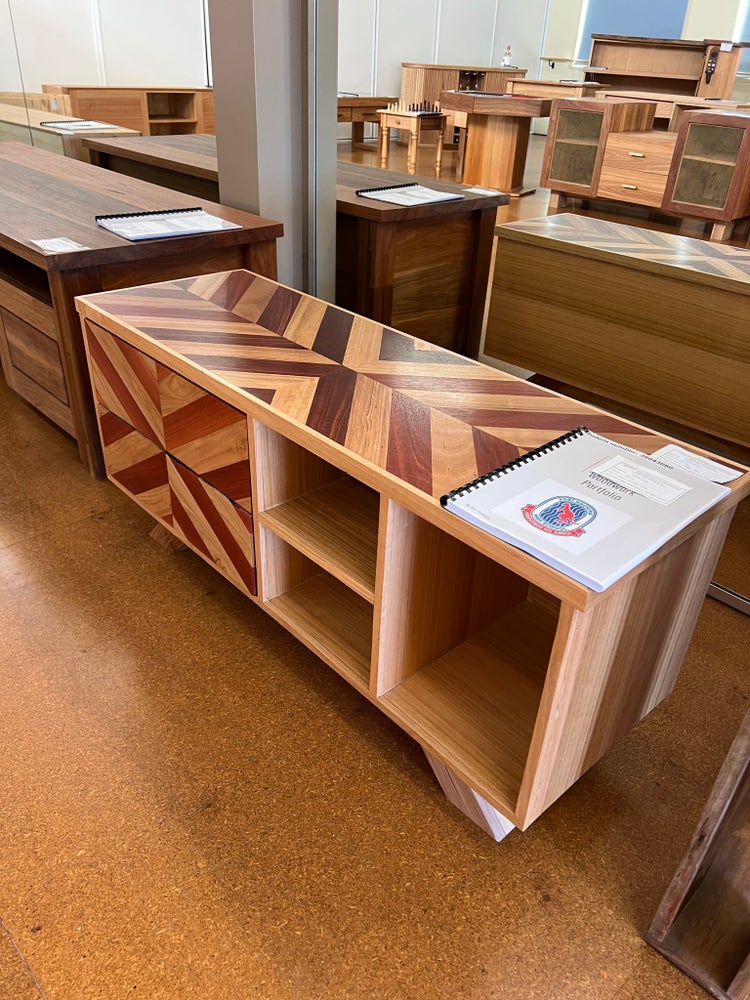
Timber – Students enhance their woodworking skills by designing and constructing timber projects focused on craftsmanship and detail. They learn various joining methods and safely use hand and power tools. Through measuring, cutting, assembling, and finishing, students refine practical skills and produce quality, creative projects demonstrating technical ability.
Metal – Building on metalworking skills, students design and create metal projects emphasising craftsmanship. They apply metal joining and fabrication techniques while developing safe tool use. Measuring, cutting, shaping, assembling, and finishing processes help students improve practical skills and produce well-crafted, creative works.
Graphics – Students develop graphic communication by applying AS1100 drawing standards across design tasks. Using drawing instruments and CAD software, they create accurate technical and pictorial drawings, explore rendering techniques, and enhance visual presentation skills, building a foundation for advanced design and engineering.
Multimedia – Students explore multimedia design using various software to create digital presentations. They develop skills in image manipulation, illustrator-based drawing, text editing, video production, filming, and sound editing, producing polished multimedia projects that boost creativity and digital communication across platforms.
Computing Technology – This course develops practical computing skills for digital solutions in industrial, commercial, and recreational fields. Emphasising computational thinking, data analysis, and programming, students design user-focused websites, apps, mechatronic systems, and games while considering ethical, social, and legal data issues. They engage with emerging technologies like virtual reality and digital networks to build knowledge and creativity for a tech-driven world.
Stage 6 (Year 11 and 12)
Industrial Technology Timber and Furniture – Develops students’ skills in designing, producing, and evaluating timber products. They learn about timber materials, tools, machinery, and joining methods, applying safe work practices to create functional, aesthetic projects. The course focuses on design thinking, problem-solving, and craftsmanship, giving insight into industrial processes, sustainable materials, and industry standards, preparing students for further study or careers in timber, design, and manufacturing.
Design and Technology – Students explore design, innovation, and problem-solving by creating sustainable solutions. They examine design’s impact on people and the environment, applying design thinking, research, and project management. Using various materials and tools, students design, prototype, and evaluate ideas, developing creativity, critical thinking, and technological skills for future careers in design, engineering, architecture, and product development.
Engineering Studies – Introduces engineering principles applied to real-world problems by combining science, maths, and technology. Students study mechanics, materials, hydraulics, and design, building analytical and problem-solving skills through theory and practice. The course highlights innovation, sustainability, and ethics, preparing students for engineering, applied sciences, and related careers.
Enterprise Computing – Covers computing in business management, showing how ICT improves efficiency, data management, and decision-making. Students develop skills in data analysis, system design, programming, and cybersecurity to create digital solutions for business challenges. They also explore ethical, social, and economic impacts of computing and emerging digital trends.
VET Construction – Provides practical skills and industry knowledge for construction work. Students learn safe use of tools, materials, and equipment while developing competencies in carpentry, concreting, and workplace communication. Emphasising safety, teamwork, and problem-solving, the course offers hands-on experience through simulated and real projects. Nationally recognised units prepare students for further training, apprenticeships, or employment in construction trades.
See below link for further information.

Extra curricular opportunities
Discover clubs, sports and other activities your child can enjoy at school.
Our principal and staff
Get to know our principal and staff, who work together to create a positive school culture.